



















compost
Make Your Composting Count and Help Protect the Ocean!


Updated May 2026 | Originally published May 2025
Compost Awareness Week runs 3–9 May and this year, we're taking a moment to connect something you might do in your kitchen every day to something happening thousands of kilometres away, in the crystal-clear waters of the Solomon Islands. For the second year in a row, we're beyond excited to announce our support for the Waste To Wealth Program in the Solomon Islands with Positive Change For Marine Life (PCFML).
New to composting and want to learn more? Start with our complete guide to composting at home to work out how to start at home and then come back to finding out how it helps our oceans!
Here's the thing: the way we handle waste at home matters far beyond our own gardens. It matters for waterways, for oceans, and for the communities and marine life that depend on them.

Why composting is one of the most powerful things you can do at home
Organic waste (like your fruit peels, coffee grounds, vegetable scraps) makes up roughly 40% of household rubbish. When it ends up in landfill, it breaks down without oxygen and releases methane, a greenhouse gas far more potent than CO₂. When it ends up in waterways (as it often does in communities without reliable waste infrastructure), it pollutes the water, depletes oxygen, and devastates marine ecosystems.
Composting at home short-circuits all of that. Your scraps become nutrient-rich fertiliser instead of pollution. It's one of the most direct, low-effort ways to reduce your household's environmental footprint.
But for many communities around the world, composting isn't just a nice-to-have, it's an urgent necessity.

Meet our May Charitable Giving Partner: Positive Change for Marine Life
This Compost Awareness Week, we're proud to spotlight Positive Change for Marine Life (PCFML) and their remarkable Waste to Wealth program in the Solomon Islands and announce them as our May Charitable Giving Partner.
PCFML is a community-driven ocean conservation organisation working in marine biodiversity hotspots across Australia, India, and the Solomon Islands. Their mission: empower local communities to take real action for the ocean, by building conservation-focused economies from the ground up.
The Solomon Islands sits at the heart of one of Earth's most biodiverse marine environments, second only to the Coral Triangle for coral and fish diversity. It's also on the frontline of climate change, faces significant food insecurity, and has ongoing waste management challenges that put those precious reefs and sea turtles at direct risk.

Waste to Wealth: turning a problem into possibility
PCFML's Waste to Wealth program does exactly what it sounds like. Rather than letting waste flow into rivers and the ocean, they're building closed-loop circular economies in local communities and it was voted a Top 10 Waste to Wealth Program by the United Nations (from 232 global projects).
Here's what that looks like in practice:
- A Waste Collection Service employing marginalised women, youth, and people with disabilities to collect and segregate five streams of household and business waste every week
- A Repurposed Waste Unit using shredding, plastic press, extrusion and mould machines to turn plastic waste into bags, jewellery, furniture, and crafts, sellable goods that generate real income
- A Black Soldier Fly Larvae Composting System that converts organic waste (including meat and fish) into chemical-free fertiliser in just 7 days, with no smell, no leachate. This activity is where our support will go as we're super passionate about the power of compost!
- Education and training programs that bring communities along for the whole journey
The numbers after just 9 months:
Over 120 community members trained in waste management, collection, recycling and repurposing
- 20 new jobs created
- 3.3 tonnes of solid waste diverted and converted into useful products
- 330kg of organic waste converted into 193kg of organic fertiliser
- 100% of households on Nusabaruku Island participating in the Waste Collection Service
The composting element alone addresses one of the Solomon Islands' top national priorities, organic waste makes up 40% of all waste streams there, and diverting it from waterways is critical to protecting the marine environment that communities depend on.
What makes this different
PCFML's approach isn't just environmental, it's deeply social. The program specifically focuses on creating livelihoods for women and youth who are often marginalised in formal economies. It aligns with 14 of the UN's 17 Sustainable Development Goals, and has strong support from the Solomon Islands Government and partnerships with the University of the Sunshine Coast, Solomon Islands National University, and a growing network of regional organisations.
This is conservation that works with communities, not around them.

How your purchase supports this work
A portion of every purchase at Seed Sprout this May goes directly to support PCFML's Waste to Wealth program in the Solomon Islands. When you choose sustainable products for your home, you're not just reducing your own footprint, you're contributing to a program that's protecting some of the most biodiverse marine habitat on Earth. That's composting that counts. In every sense.
Ready to close the loop at home?
If this has inspired you to think about your own organic waste, you're in the right place.
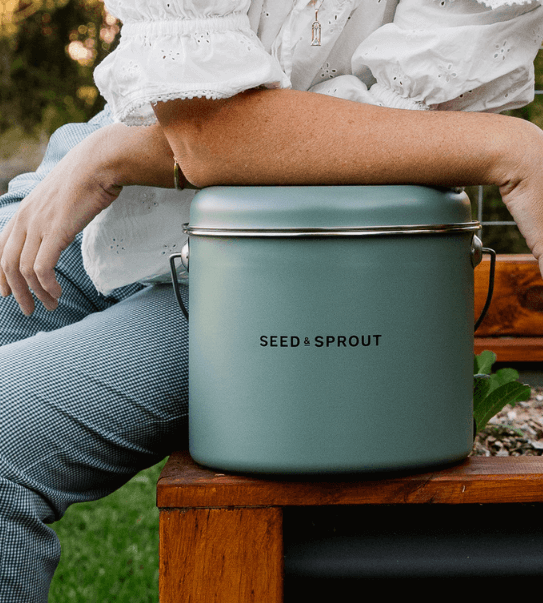
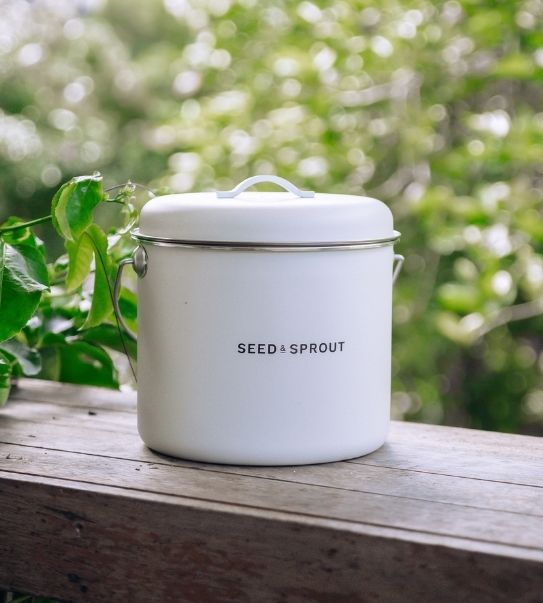
Browse our home composting range, from kitchen compost bins to starter sets, to make it easier to separate, store, and process your food scraps. Every purchase this May directly supports PCFML's work in the Solomon Islands.
Looking to make an even bigger impact? You can donate directly to the Waste to Wealth Program here and help support ongoing waste solutions in the Solomon Islands.
Want to go deeper on the composting basics? Our ultimate guide to composting covers everything from getting started to troubleshooting and our composting basics post is the perfect quick-start if you're just getting going.
Thanks to you, we're able to support these sorts of initiatives every month. Find out more about or 2026 Charitable Giving Program. Feel free to nominate an organisation!