



















Education
Why Enamel? What Makes Enamelware Worth Keeping


Our legendary product team started thinking about enamel as a material to explore many, many years ago. Almost everyone on the team had a story about enamel: our CEO Beck has an entire family heirloom enamel set from her nanna and we're always digging up some very well preserved enamel gems at local op shops.
It got us all thinking that if enamel has been part of kitchens for generations, why not take a looksie? So here's what we found, and why enamel now has a spot in our kitchen range from the baking tray to the dinner table.
What Is Enamelware, Exactly?
It sounds fancy, it's essentially a glass coating fused over the top of steel. Vitreous enamel is fused glass, not a coating. Powdered glass is fired onto steel at around 780 to 850°C, and in that heat the two bond together for good. Nothing is glued on. Nothing is sitting on top waiting to wear away.
Our enamel uses frit (the powdered glass base) and pigment sourced from Italy, a country that has been making vitreous enamel at an industrial scale for a very long time.
Our product team compared just about every baking tray material out there before landing on this one (it was a long road). If you'd like the full side-by-side of Baking Tray options specifically, here's why we chose enamel bakeware.
Is it the same as ceramic? Not quite. Ceramic is clay that's fired on its own. Enamel is glass fused onto metal, so it has a steel core underneath and generally handles a bump better than ceramic does (although we still recommend you to treat it with care, kind of like glassware, to keep it safe for longer).

Why We Keep Coming Back to Enamel
Once you know how it's made, the benefits start to make sense.
- There's nothing to peel. The glass and steel are bonded together, so there's no surface layer to scratch thin and flake off over the years.
- It doesn't hang onto things. The surface is non-porous, which means turmeric stains and lingering onion smells don't get to move in.
-
Acidic food is welcome. Enamel is non-reactive, so a slow-cooked ragù, a lime-heavy dressing or a jar of quick-pickled onions won't pick up a metallic taste.
- It handles the heat. Our enamel bakeware is oven safe up to 250°C, which covers everything from a slow Sunday roast to very crispy potatoes.
- It's good-looking enough to leave out. The glossy finish means a dish can go from the oven to the table without anyone hunting for a platter.
- The steel can be recycled. When a piece does eventually retire, the steel base can go into standard metal recycling, depending on your local facilities.
The short version: enamel is tough, easy to live with, and doesn't wear out the way a coated surface does.

Enamel for Every Part of the Meal
One of the things we like most is how far a single material can stretch. Here's how the range fits together.
- For prep: The Mix & Measure 5 Piece Set brings together three nesting enamel bowls, the Enamel Measuring Jug (1200ml, with markings on the inside), stainless steel measuring cups and spoons, and a silicone spatula. Between them, they cover the mixing, whisking and pouring.
- For cooking: The Enamel Baking Tray Set brings three flat trays in mixed sizes for biscuits and slices. The Enamel Baking Roaster Pan Set pairs a deep tray and a shallow tray with a wire rack. The Enamel Covered Roasting Dish Set is two trays in contrasting colours that work on their own or stacked together.
- For serving: The Enamel Serving Bowl Set is three nesting bowls (2.2L, 3.1L and 4.2L) that are just as happy mixing a cake batter as holding a big summer salad, and the Enamel Egg Cup Set comes in pairs of 80ml cups, made for soft-boiled eggs and handy for dips and condiments too.
-
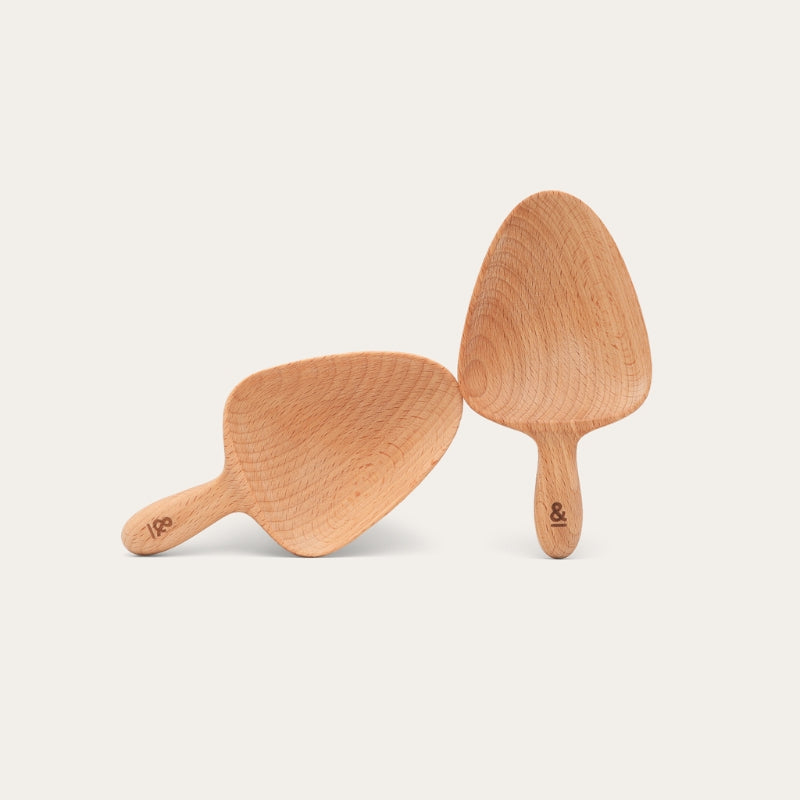
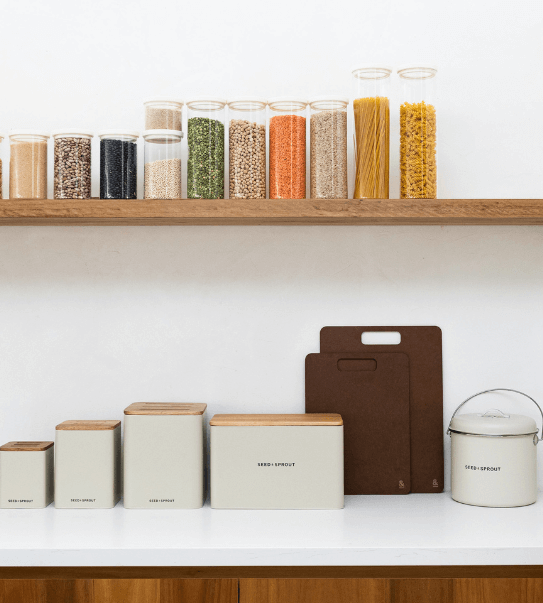
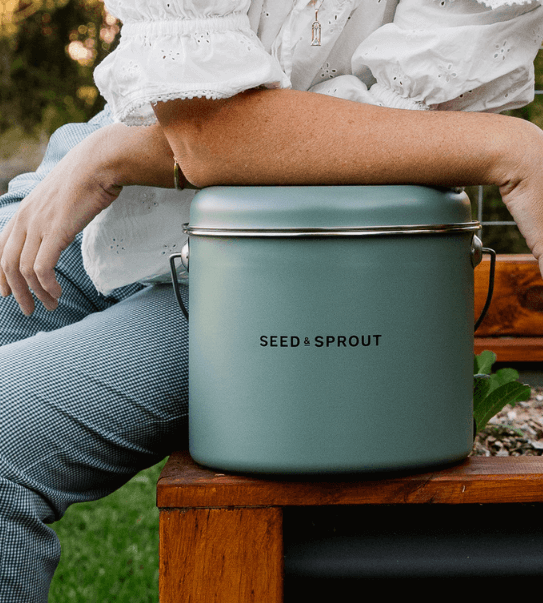
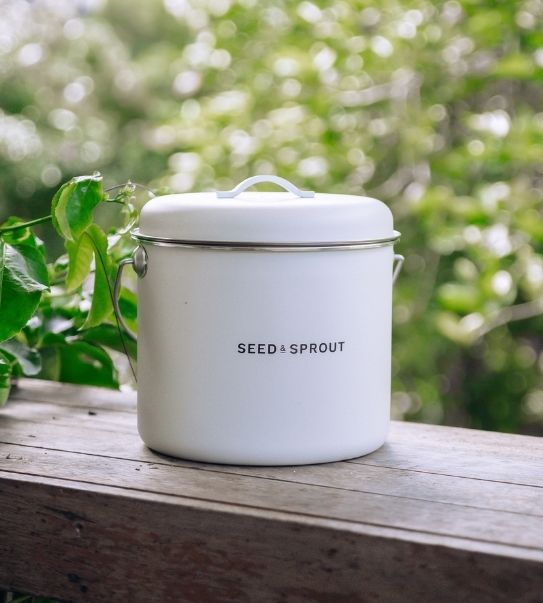
For storing: The Enamel Storage Jar comes in 1.3L and 1.7L sizes with a silicone seal and a handled lid, and the Enamel Storage Jar Set pairs a medium and a large jar with two beechwood pantry scoops for the flour, oats and anything else that needs decanting.
If you'd rather start with pieces that already work together, there are bundles for that too. The Cook & Serve Set pairs the Covered Roasting Dish Set with a silicone spatula and ladle. Ultimate Chef brings the roaster pans and rack, the measuring jug, a silicone turner and six large silicone muffin cups. And the Complete Enamel Baking Bundle gathers the bakeware in one hit.

The Honest Bits
Enamel isn't perfect, and we'd rather you hear that from us.
- It's heavier and costs more than an aluminium tray. That's the steel inside doing its job.
- It can chip if it's dropped or knocked hard, especially around the edges. It's glass, after all. If a chip exposes the steel underneath, retire that piece from food use.
- It's not for the microwave. The steel base and microwaves do not get along (sparks are not the vibe).
- It's not non-stick. The smooth surface releases food well, but a little oil or butter still helps.
A Little Care Goes a Long Way
Looking after enamel is mostly common sense. Wash with a soft sponge, and hand washing will keep that gloss looking its best. Skip the long soaks, too. Reach for wooden or silicone tools over metal ones (our Silicone Utensil Set is a natural match), and swap the electric beaters or metal whisk for a spatula when mixing in the bowls. Let hot pieces cool before they meet cold water. And when you're stacking, a tea towel between pieces stops them clinking against each other in the cupboard.
That's it. No seasoning, no special products, no guesswork.
Ready to Bring Enamel Home?
There's no need to replace everything at once. Start with the piece you'd reach for most, whether that's the tray you roast on every week or the jar that holds your flour, and build from there. Preorder the Enamel Range →